

In an industry defined by rapid iteration and shifting consumer demands, the ability to gather accurate market insights quickly is a critical competitive advantage.
Belkin, a leader in consumer electronics, partnered with SYMAR to dismantle the traditional barriers of market research. By moving away from slow, capital-intensive human panels and embracing SYMAR’s proprietary synthetic respondent technology, Belkin successfully validated complex product concepts, fine-tuned packaging strategies, perfected marketing messaging, and significantly reduced research costs without sacrificing data fidelity.
Context: The Belkin Philosophy
Belkin stands as one of the most recognizable names in consumer technology, a reputation built on a decades-long commitment to making digital life simpler, more intuitive, and more connected. From its early innovations in computer connectivity to its modern portfolio of charging solutions, docks & hubs, device protection, and audio products, the company has consistently focused on solving real-world user frustrations with elegant, reliable design.
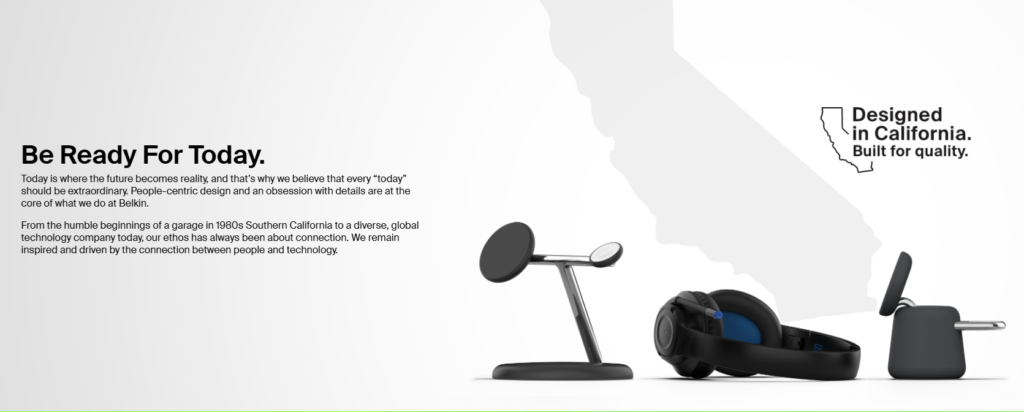
Belkin’s brand identity is deeply rooted in trust: they engineer quality products that work seamlessly, last for years, and quietly elevate the everyday experience of interacting with technology. Today, Belkin continues to evolve in a landscape defined by rapid innovation and shifting consumer expectations. Its emphasis on sustainability, user-centric engineering, and premium design positions the company as a leader in the accessories market, not just by scale, but by philosophy.
However, maintaining this philosophy requires a deep, ongoing dialogue with the consumer. As the company expands into competitive categories, the need to anticipate how people live, work, and connect becomes paramount.
The Challenge: The Friction of Traditional Research
For Steve Smith, Senior Director of Global Marketing, and the broader Belkin team, the traditional mechanisms of market research presented a bottleneck. In the consumer electronics sector, the time gap between a product concept and a shelf-ready unit is fraught with risk.
Traditional methodologies, such as recruiting focus groups, managing logistics for central location testing, and fielding broad-spectrum surveys, are inherently slow and cost-prohibitive. Beyond the logistical drag, Smith identified a critical inefficiency regarding the output itself: the data was static. Significant budgets were often poured into studies that yielded a snapshot in time, insights that would populate a single slide deck, be reviewed once, and then largely “collect dust” on a server, never to be used again.
This fleeting utility, combined with the slow pace, often forces brands to make a difficult choice: wait weeks for data and risk losing first-mover advantage, or proceed on instinct and risk market misalignment.
Belkin sought a third option. They needed a solution that could provide the rigor of human feedback with the speed of digital computation. They needed to test specific hypotheses regarding new audio devices and packaging designs without the massive overhead associated with global field studies.
The Solution: SYMAR & The Memory Infusion Engine
To solve this, Belkin partnered with SYMAR (previously known as OpinioAI) to deploy a sophisticated synthetic research program. This engagement moved far beyond generic AI interactions, SYMAR architected a bespoke solution designed to mirror the complexity of Belkin’s actual customer base.
The solution was built on a rigorous, multi-stage methodology:
1. High-Fidelity Custom Modeling
SYMAR began by ingesting relevant data to custom build an AI model. Rather than relying on a LLM’s general knowledge of the internet, the system was trained on specific market dynamics relevant to Belkin’s sectors. This ensured that the AI understood the nuances of consumer electronics, from the importance of battery life to the tactile feel of sustainable materials and competitive landscape.
2. Strategic Memory Infusion
The core differentiator of the SYMAR approach was infusing Synthetic Memories. SYMAR took existing market research based on needs-based customer segmentation historical data, customer feedback loops, and other traditional market research and infused them into the model as “memories.” This process gave the AI context and history, preventing hallucinations and grounding responses in reality.
3. The Creation of Synthetic Personas
Using this fine-tuned foundation, SYMAR recreated specific, diverse buyer profiles to serve as the testing panel. These were not generic chatbots, but distinct personas with specific demographic traits, income levels, family statuses, and interests.
The team deployed a roster of specialized personas including:
- Frannie (The Fitness Listener): Focused on active lifestyles, travel, and outdoor activities.
- Simon (Surround Sounder): A single male with a strong interest in music and movies, critical of audio quality.
- Emily (The Efficiency Seeker): Interested in cooking and books, prioritizing seamless integration.
- Tyler (The Trend Setter): Primarily interested in gaming and staying ahead of tech curves.
- Maya (The Mindful Millennial Mom): Focused on family activities and balanced technology use.
These personas could be interviewed, surveyed, and observed just like human participants, but at a scale and speed previously impossible.
Use Cases & Implementation
Belkin leveraged SYMAR’s technology across several critical research verticals:
Validating Innovations Across Product Categories
Entering the competitive audio market requires precision, as consumer loyalty is hard-won. Belkin initially deployed synthetic respondents to test concepts for new audio devices. The personas were able to evaluate proposed feature sets and use-cases, providing the marketing team with early signals on what features were “must-haves” versus “nice-to-haves.”
Building on the success of the audio pilot, Belkin scaled the methodology to its other core business units:. By replicating the fine-tuning process for these categories, the team could just as easily validate user behaviors around charging habits, travel power needs, and workspace connectivity. This expansion transformed the synthetic respondents from a niche testing tool into a standardized validation engine across Belkin’s entire portfolio, ensuring that product roadmaps were optimized before expensive engineering cycles began.
Packaging Optimization
Packaging is often the “silent salesman” on the retail shelf. Belkin utilized SYMAR to perform extensive pre-packaging testing. Synthetic respondents analyzed visual concepts to determine clarity of messaging, perceived value, and brand alignment. The feedback allowed the creative design team to iterate rapidly, discarding confusing layouts and doubling down on designs that triggered positive sentiment.
Agile Market Intelligence
Beyond specific product launches, the system provided an “always-on” focus group. The marketing team could engage in deep-dive conversations with these personas to understand broader shifts in consumer sentiment, effectively slashing the “time-to-insight” from weeks to mere hours.
Marketing Messaging Validation
Effective communication is just as crucial as product engineering. Belkin leveraged the synthetic personas to rigorously test marketing claims, analyzing both textual copy and visual imagery. This multimodal approach allowed the team to pinpoint exactly which creative assets resonated most effectively with their target audience. By validating these elements early, Belkin could confidently push their market positioning forward, ensuring that every piece of messaging, from tagline to ad creative, was optimized for maximum impact before the campaign ever went live.
The Impact: Speed, Savings, and Accuracy
The collaboration between Belkin and SYMAR produced immediate, quantifiable results that have reshaped how the marketing team approaches data.
- Cost Rationalization: Belkin successfully slashed the costs associated with early-stage research. By substituting synthetic respondents for initial human panels, budget could be reallocated to other high-impact marketing activities.
- Decisive Speed: The feedback loop was tightened dramatically. Questions that previously required a month-long study could be answered overnight, allowing for an agile decision-making process that aligns with modern product development cycles.
- Data Fidelity: Perhaps most importantly, the reliability of the data was validated with customer insights research Belkin had. In comparative tests, the synthetic respondents delivered insights indistinguishable from historical data derived from actual Belkin customers.
In instances where the data was not a 1:1 match, it was consistently derivative and directionally accurate, proving that synthetic respondents are a highly effective tool for de-risking decisions and A/B testing concepts before physical production.
“In our industry, speed to insight is everything. SYMAR has given us a new lever for growth, allowing us to validate our instincts with data faster than we thought possible. By combining our own customized traditional market research with AI, we can now test concepts and refine strategies overnight, ensuring that by the time we go to market, we are moving forward with validated, data-backed confidence.”
— Steve Smith, Senior Director of Global Marketing, Belkin
Conclusion
Belkin’s story is ultimately one of adaptability, a company that remains relevant by anticipating how people live. By partnering with SYMAR, Belkin has applied that same adaptability to its internal operations.
They have successfully integrated synthetic respondents into their workflow, proving that with the right partner and the right methodology (building custom models and infusing Synthetic Memories), AI can replicate the voice of the customer with startling accuracy and speed.